Retailer OTIF and fill rate are not just warehouse or transportation metrics. They affect revenue, deductions, buyer confidence, shelf availability, customer service workload, and brand reputation.
OTIF stands for On Time in Full. In retail distribution, it generally measures whether an order arrives within the retailer’s required delivery window and in the expected quantity. Fill rate measures whether ordered product is available and fulfilled.
For frozen and refrigerated food brands, these metrics are even more complex. A shipment may leave the warehouse as complete but miss its appointment. It may arrive on time, but be rejected for temperature, documentation, pallet condition, or product accuracy. It may be available in the network but stored too far from the retail DC to support the required delivery window.
How to Align Retail Performance Goals with Your Cold Chain 3PL
A cold chain 3PL helps manage those connected issues across temperature-controlled storage, transportation, logistics coordination, visibility, and distribution. For executives, the goal is not to chase one metric in isolation. The goal is to build a cold chain operating model that improves retail performance without increasing product risk.
Step 1 — Quantify the Cost of Retail Performance Misses
Retail scorecard misses can look like operational problems, but they usually create financial consequences quickly. Chargebacks, deductions, rejected product, emergency freight, lost sales, out-of-stocks, customer service labor, and buyer frustration all carry a cost.
Executives need to understand where those costs are coming from before deciding what to fix. A late delivery may be expensive, but a rejected load can be even more damaging. A short shipment may hurt fill rate, but the root cause may be inventory placement, production timing, product allocation, or poor visibility.
The first step is to connect each miss to its financial impact. How much did the deduction cost? Was replacement freight required? Did the retailer lose shelf availability? Did customer service spend hours chasing updates? Did the issue repeat by customer, lane, product, or facility?
Once the cost is visible, leadership can prioritize the areas that will make the greatest difference.
Step 2 — Separate the Miss Types Before Choosing a Fix
Not every retail performance issue has the same cause. Treating every miss like a transportation failure can lead to the wrong solution.
A late but complete shipment may point to appointment scheduling, routing, dock timing, or carrier execution. An on time but short shipment may point to inventory accuracy, allocation, replenishment, or order fulfillment. A complete but rejected shipment may point to temperature compliance, pallet condition, documentation, or retailer receiving requirements.
Documentation failures create another category. The correct product may ship, but ASN, EDI, PO, label, or pallet data may not match the retailer’s expectations. In other cases, inventory may exist in the network but be stored in the wrong location to meet the required delivery window.
A cold chain 3PL should help identify these distinctions. The goal is to understand whether the miss started with inventory, warehouse execution, freight planning, compliance, temperature control, customer requirements, or communication.
Step 3 — Use a Cold Chain 3PL to Improve Inventory Placement
Inventory placement has a direct effect on OTIF, fill rate, transportation cost, and temperature risk. If product is stored too far from the retail DC, the delivery window becomes harder to meet. If inventory is concentrated in one location while demand expands into new regions, the brand may face more expedited freight, longer transit times, and tighter replenishment schedules.
A cold chain 3PL can help food brands evaluate where inventory should sit based on retail DC demand, order cadence, temperature requirements, customer growth, and regional shipping patterns. The question is not only, “Do we have product?” The better question is, “Do we have the right product in the right place, with enough time to deliver it correctly?”
Better inventory placement can reduce unnecessary transit pressure and give teams more flexibility when orders change. It can also support fill rate by making available inventory more usable for the customers and regions that need it most.
For frozen and refrigerated products, regional cold storage capacity becomes part of retail execution. It supports faster replenishment, shorter lanes, better appointment planning, and fewer last-minute decisions.
Step 4 — Align Cold Storage and Freight Planning
Cold storage and freight planning cannot operate on separate tracks if the goal is stronger retail performance. Warehouse teams influence order readiness, picking, staging, dock timing, product condition, and inventory accuracy. Transportation teams influence pickup timing, retail appointments, routing, trailer availability, consolidation, and delivery execution.
When those teams are not aligned, small gaps can become costly. Product may be staged before transportation is ready. A carrier may arrive before the order is complete. A retail appointment may be scheduled without enough visibility into dock capacity. Customer service may not have the information needed to communicate when something changes.
A cold chain 3PL helps by connecting warehouse activity with outbound movement. That alignment supports better dock scheduling, cleaner staging, improved trailer utilization, and more predictable dispatch.
Retail LTL consolidation can also play an important role for food brands that have frequent smaller shipments into retail DCs. When consolidation is connected to cold storage and freight planning, brands can move smaller replenishment orders more consistently without waiting for full truckload volume or relying on one-off LTL decisions.
Step 5 — Build a Shared Retail Performance Scorecard with Your 3PL
A scorecard should do more than report whether performance went up or down. It should help the brand and the cold chain 3PL understand what happened, why it happened, and what needs to change.
A useful executive scorecard should include metrics that connect service, inventory, compliance, temperature control, and cost.
| Metric | Why it matters |
| OTIF by customer and lane | Shows delivery performance patterns |
| Fill rate by SKU and customer | Identifies fulfillment and inventory issues |
| Temperature exceptions | Shows where product integrity risk appears |
| ASN/EDI accuracy | Helps reduce documentation-related chargebacks |
| Claims and rejections | Connects service failures to financial impact |
| Appointment compliance | Shows whether retail receiving windows are being met |
| Cost-to-serve by lane | Helps evaluate freight and network efficiency |
The value is in the root cause, not just the score. If OTIF is low, leadership needs to know whether the issue came from late staging, appointment availability, carrier performance, retailer requirements, weather, documentation, or inventory placement.
A shared scorecard also creates accountability. The customer and provider can review the same data, agree on the cause, and assign corrective actions.
Step 6 — Run Monthly Root-Cause Reviews
Retail performance improves when teams review misses as part of a regular operating rhythm. Monthly reviews should look beyond the final number and focus on the causes behind late deliveries, short shipments, rejections, temperature exceptions, and chargebacks.
The right review should include operations, logistics, customer service, finance, sales, and the cold chain 3PL. Each team sees a different part of the problem. Finance sees deductions and cost impact. Customer service sees retailer communication. Operations sees inventory and staging. Logistics sees lane performance and appointment risk.
This review should answer practical questions:
- Which customers, lanes, SKUs, or facilities created the most issues?
- Were misses caused by inventory, systems, carriers, retailer rules, or internal timing?
- Were corrective actions completed?
- Did the same issue repeat?
- Should inventory placement, replenishment logic, or freight planning change?
The goal is to move from explaining what went wrong to reducing the chance that it happens again.
Step 7 — Choose a Cold Chain 3PL Built for Retail Growth
A food brand may be able to manage retail distribution with a basic warehouse and carrier model early on. As the business grows, that model often becomes harder to control. More customers, regions, SKUs, delivery windows, and compliance requirements create more handoffs.
A cold chain 3PL built for retail growth should bring more than space and trucks. The right partner should connect temperature-controlled storage, transportation support, retail consolidation, WMS-based visibility, EDI capabilities, reporting, customer communication, and regional execution.
For executives, the provider evaluation should focus on execution. Can the 3PL support frozen and refrigerated inventory across the right markets? Can they coordinate storage and freight planning? Can they support retail-specific requirements? Can they show performance by customer, lane, SKU, or facility? Can they help the business scale without rebuilding the cold chain one region at a time?
The stronger the retail growth plan, the more important those capabilities become.
90-Day Cold Chain 3PL Improvement Roadmap
Executives do not need every operational detail on day one. They need a practical plan that helps the organization diagnose problems, align teams, and measure progress.
| Timeline | Focus | Goal |
| Days 1–30 | Diagnose misses and cost impact | Identify root causes by customer, lane, SKU, and facility |
| Days 31–60 | Align inventory, storage, and freight planning | Reduce preventable timing, fulfillment, and staging issues |
| Days 61–90 | Implement reporting and review cadence | Track progress, assign corrective actions, and improve accountability |
This type of roadmap turns OTIF and fill rate improvement into a managed initiative instead of a vague performance goal. It also gives leadership a way to evaluate whether the current cold chain model is supporting growth or creating avoidable friction.
Improve Retailer OTIF and Fill Rate Through Connected Cold Chain Execution
Improving retailer OTIF and fill rate requires more than pushing carriers harder or adding warehouse capacity. Food brands need to understand which misses are costing the business, separate the root causes, position inventory closer to demand, align warehouse and transportation planning, and review performance with the right scorecard.
A cold chain 3PL can support that work when it connects storage, transportation, logistics, visibility, and regional execution through one coordinated operating model. For frozen and refrigerated products, that connection helps protect product quality while improving the delivery performance retailers expect.
The executive opportunity is to turn retail cold chain performance into a repeatable process. When inventory placement, freight planning, compliance, reporting, and exception response work together, food brands are better positioned to improve OTIF, protect fill rate, reduce avoidable costs, and scale with greater confidence.
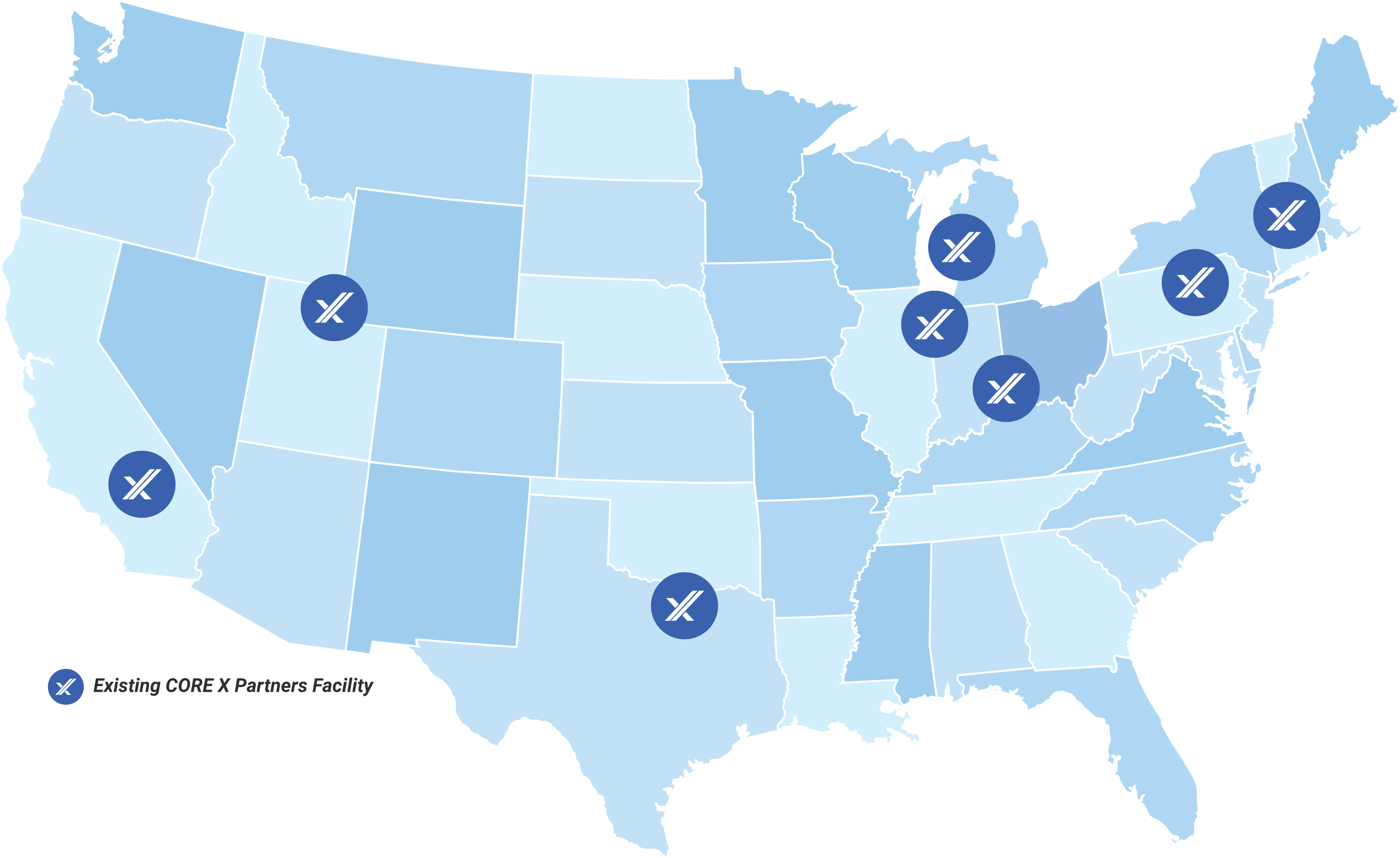
CORE X Partners helps food companies protect temperature-sensitive products through a nationwide cold chain network built for retail storage, transportation, logistics, and distribution. With experienced regional operators, shared technology, retail consolidation support, and coordinated cold chain execution, CORE X helps customers improve visibility and reduce avoidable handoffs. Contact CORE X Partners to learn how a cold chain 3PL can support stronger OTIF, fill rate, and retail distribution performance for frozen, refrigerated, and temperature-sensitive products.